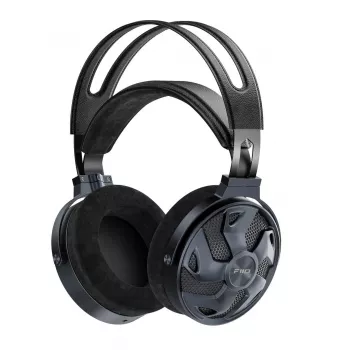
60mm Open-Back Wired Headphones (32Ω): Big Stage Sound

High-Res 60mm Dynamic Driver Open-Back Wired Headphones – 32Ω Impedance
A 60mm dynamic driver paired with an open-back design is built to prioritize space, separation, and natural tone. With a 32Ω impedance load, these wired headphones are positioned for straightforward pairing with everyday sources while still benefiting from a clean, capable amplifier. The result is a listening style that leans toward “out of your head” staging, lifelike ambience, and a more speaker-like sense of air—best enjoyed where isolation isn’t required. For more guidance, see Sivga Luan – Reviews – Head-Fi.
If you’re shopping specifically for this configuration, see the High-Res 60mm Dynamic Driver Open-Back Wired Headphones – 32Ω Impedance. For further reading, see Truthear PURE – Reviews – Head-Fi.
Quick takeaways
- Large 60mm dynamic driver for impactful dynamics and scale
- Open-back housing for wider, more speaker-like staging
- 32Ω impedance for easier driving than many high-impedance open-backs
- Best suited for quiet rooms where sound leakage is not a problem
What the open-back design changes
Open-back headphones vent the rear of the driver rather than sealing it inside a closed cup. That single design choice reshapes the entire experience: how wide the stage feels, how “fast” transients appear, and even how comfortable long sessions can be.
- Creates a more spacious presentation by letting air move freely behind the driver
- Improves perceived imaging and positional cues in well-recorded tracks
- Reduces the “sealed-in” pressure some listeners feel with closed-backs
- Leaks sound outward and lets external noise in, making it a poor fit for commuting or shared offices
To compare open-back and closed-back tradeoffs in plain terms, What Hi-Fi?’s open-back vs closed-back overview is a helpful reference point.
60mm dynamic driver performance basics
A 60mm driver is physically large for a headphone, and that can contribute to a sense of scale—especially on orchestral swells, cinematic scores, or bass lines that need room to breathe. Size alone doesn’t guarantee better sound, but it can make certain qualities easier to achieve when the tuning and damping are done well.
- Driver size can support stronger macrodynamics (big swings from soft to loud) and a sense of scale
- Bass quality depends on tuning and control; a larger driver can feel weightier when properly damped
- Midrange clarity benefits from low distortion and controlled resonances—important for vocals and guitars
- Treble detail can sound more effortless when the driver remains stable at higher volumes
Practically, this style often shines with acoustic recordings, live sessions, jazz ensembles, and soundtrack material where the room sound and layering are part of the music—not just the notes.
32Ω impedance and what it means for powering
At 32Ω, these headphones sit in a “friendly” impedance range for modern devices. Many phones, laptops, and USB-C/Lightning dongles can reach comfortable listening volume—though the last bit of punch and control may depend on the source’s power and output quality.
- 32Ω is commonly compatible with phones, laptops, and basic USB-C/Lightning dongles, though volume headroom varies by device
- Better amplification can tighten bass, improve transient snap, and reduce strain at higher listening levels
- For cleaner output, prioritize a low-output-impedance source (generally under ~2Ω) to avoid unintended tonal shifts
- If the sound seems flat or lacks punch, the limiting factor is often source power rather than the headphones themselves
For a straightforward explanation of impedance and why it matters for matching headphones to gear, Sennheiser’s impedance guide breaks down the basics clearly.
Sound signature considerations for different uses
Open-backs with a large dynamic driver tend to reward content that benefits from spaciousness and separation. They’re not “one-size-fits-all,” but they’re exceptionally good at the things they’re designed to do.
For gamers, spatial audio and clean positional cues can be heavily influenced by processing and setup. NVIDIA’s discussion of spatial audio and in-game cues is a solid primer: How surround and spatial audio affect gaming audio cues.
Comfort and daily practicality
Specs and setup checklist
Key specs and buying checkpoints
| Item | What to look for | Why it matters |
|---|---|---|
| Driver type / size | 60mm dynamic | Supports strong dynamics and a big, open presentation when well tuned |
| Design | Open-back | Wider stage and natural timbre; leaks sound and reduces isolation |
| Impedance | 32Ω | Easier to drive from common devices; still benefits from a clean amp |
| Use case | Home desk / quiet room | Open-backs perform best where leakage and noise are non-issues |
| Source pairing | Low-noise output, low output impedance | Cleaner bass control and more consistent frequency response |
Who this style of headphone suits best
In-stock picks (internal links)
- High-Res 60mm Dynamic Driver Open-Back Wired Headphones – 32Ω Impedance
- 12-Ton Heavy Duty Hydraulic Shop Press for Garage and Workshop
- 16 Piece Blue Stoneware Dinner Set – Elegant Floral Embossed Plates & Bowls
FAQ
Will 32Ω headphones work well from a phone or laptop?
Generally yes for volume, especially with a modern laptop or a decent USB-C/Lightning dongle, but headroom varies by device. A cleaner dongle DAC or headphone amp can improve bass control and reduce strain at louder levels, particularly if your source has weak output power or higher output impedance.
Do open-back headphones leak a lot of sound?
Yes—people nearby can hear what you’re listening to, and outside noise comes in easily. They’re best for quiet rooms, and if you use an open microphone for chat, you may need to adjust mic placement and listening volume to minimize bleed.
Are larger drivers always better than smaller ones?
Not always; tuning, damping, and distortion performance matter more than driver diameter alone. A larger driver can help with scale and macrodynamics when engineered well, but great sound is ultimately the result of the whole design.






Leave a comment